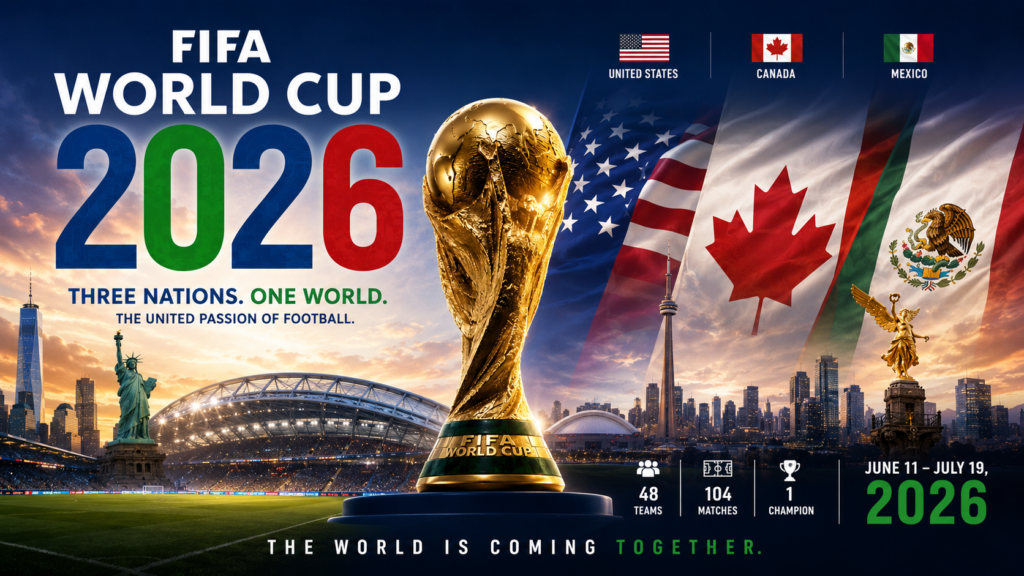
The countdown is officially on for the fifa world cup 2026 matches, and the scale of this tournament is unlike anything we have seen before. For the first time in history, 48 teams will battle across three host nations—the United States, Canada, and Mexico—creating a logistical puzzle for fans and a strategic nightmare for teams. If you are feeling overwhelmed trying to figure out where to be, when to watch, and how the new format changes everything, you are not alone. This guide breaks down the complete schedule, the revolutionary match structure, and the key storylines you need to track to stay ahead of the action.
Quick Answer: The FIFA World Cup 2026 matches will feature 48 teams playing 104 total matches across 16 host cities in the USA, Canada, and Mexico. The tournament kicks off on June 11, 2026, with the Final scheduled for July 19, 2026, at MetLife Stadium in New Jersey.
The New 48-Team Format: How the 2026 Matches Actually Work
For decades, the World Cup operated with a predictable 32-team structure. The fifa world cup 2026 matches shatter that mold. FIFA’s expansion to 48 teams is not just about adding more nations; it fundamentally changes how the tournament is played, who advances, and how you should plan your viewing schedule.
The Group Stage Revolution
The most significant structural change is the shift from eight groups of four to 12 groups of four. This means the group stage alone will feature 72 matches, up from 48 in 2022.
- Top Two Advance: The top two teams from each of the 12 groups automatically qualify for the Round of 32.
- The Best Third-Place Teams: Here is the twist that creates drama. The eight best third-place finishers across all groups will also advance. This keeps nearly every group alive until the very last matchday, as a third-place finish still offers a lifeline.
Pro Tip: When analyzing group standings, do not just look at points. Pay close attention to goal difference. In a 48-team format where third-place teams are compared across different groups, every single goal matters more than ever. A 3-0 win is significantly better than a 1-0 win.
The Knockout Gauntlet
Once the Round of 32 is set, the tournament shifts to a straight knockout format. There is no Round of 16 here; instead, we jump directly into a Round of 32, followed by the Round of 16, Quarterfinals, Semifinals, and the Final. This adds an entire extra knockout round compared to 2022, increasing the total number of matches to 104.
Summary: The expanded format ensures that the FIFA World Cup 2026 matches will have more teams, more games, and more chances for Cinderella stories. The third-place rule is the wildcard that will keep fans on the edge of their seats.
Host City Breakdown: Where the 2026 Matches Are Played
One of the biggest logistical challenges of the 2026 World Cup is its geographic spread. The FIFA World Cup 2026 matches will be played across 16 venues in three countries. This is a massive shift from the single-nation hosts of recent tournaments.
The United States (11 Venues)
The USA carries the bulk of the matches, hosting 60 of the 104 games, including all matches from the Quarterfinals onward. Key venues include:
- MetLife Stadium (New York/New Jersey): Host of the Final on July 19, 2026. Capacity: 82,500.
- SoFi Stadium (Los Angeles): Host of the Opening Match for the USA team? (TBD).
- AT&T Stadium (Dallas): The largest indoor venue, known for its massive video board.
- Mercedes-Benz Stadium (Atlanta): A retractable-roof marvel.
Canada (2 Venues)
Canada returns to the World Cup stage for the first time since 1986. They will host 13 matches.
- BC Place (Vancouver): A stunning waterfront stadium with a retractable roof.
- BMO Field (Toronto): The heart of Canadian soccer, expanded for the tournament.
Mexico (3 Venues)
Mexico, a historic host (1970, 1986), brings iconic venues back into the fold, hosting 13 matches.
- Estadio Azteca (Mexico City): The legendary venue that hosted two World Cup Finals. It will host the Opening Match of the entire tournament on June 11, 2026.
- Estadio BBVA (Monterrey) & Estadio Akron (Guadalajara): Modern, passionate atmospheres.
| Country | Venues | Matches Hosted | Key Game |
|---|---|---|---|
| USA | 11 | 60 (including Final) | Final at MetLife Stadium |
| Canada | 2 | 13 | Group Stage & Round of 32 |
| Mexico | 3 | 13 | Opening Match at Estadio Azteca |
Summary: The tri-nation setup means fans can plan an epic road trip, but it also means teams will face significant travel. A team playing in Vancouver on a Tuesday could be in Atlanta by Saturday.
Key 2026 Match Dates You Must Mark on Your Calendar
While the full schedule won’t be drawn until the groups are finalized (likely late 2025), the tournament structure is locked. Here are the critical dates for the fifa world cup 2026 matches:
-
- Opening Match: June 11, 2026 (Mexico vs. ? at Estadio Azteca)
- Group Stage: June 11 – June 27, 2026 (17 days of non-stop action)
- Round of 32: June 29 – July 3, 2026
- Round of 16: July 4 – July 7, 2026
- Quarterfinals: July 9 – July 11, 2026
- Semifinals: July 14 & July 15, 2026 (Atlanta & Dallas)
- Third-Place Match: July 18, 2026 (Miami)
- Final: July 19, 2026 (East Rutherford, NJ)
Pro Tip: The Final is on a Sunday, but the Semifinals are on a Tuesday and Wednesday. If you are planning to attend, book your travel for the entire week of July 12-19. The Third-Place Match on July 18 is often overlooked but features two teams who just lost heartbreaking Semifinals—it is usually an open, high-scoring affair.
Summary: The tournament spans 39 days, making it the longest World Cup in history. The compressed group stage (17 days for 72 matches) means there will be multiple kickoff times each day, often with games starting as early as 11:00 AM local time.
The Biggest Storylines to Watch in the 2026 Matches
The expanded format doesn’t just change the math; it changes the narrative. Here are the three biggest storylines that will define the fifa world cup 2026 matches.
The “Host Advantage” is Tripled
For the first time, three nations are co-hosts. The USA, Mexico, and Canada all automatically qualify.
- USA: The favorite among the hosts. They have a young, deep squad and will play the majority of their matches on home soil.
- Mexico: Playing at the legendary Estadio Azteca for a World Cup is a massive psychological advantage. They are the ultimate underdog host.
- Canada: The wildcard. Led by Alphonso Davies and Jonathan David, they have the talent to shock a top seed in the Round of 32.
The “48-Team Talent Pool” Effect
Critics argue that adding 16 more teams dilutes the quality. However, look at the global growth of the game. Teams like Morocco (2022 semifinalists) and Senegal (African champions) are proof that the depth is real.
- New Faces: Expect to see debutants like Uzbekistan or Burkina Faso.
- Giant Killings: The third-place advancement rule means smaller teams can play with less fear. A desperate, counter-attacking team is dangerous.
Pro Tip: Do not sleep on the Asian football Confederation (AFC) teams. With 8 or 9 spots in the 48-team field, nations like Japan, South Korea, and Saudi Arabia have proven they can compete with anyone. Japan beat Germany and Spain in 2022.
The Travel Factor: A Hidden Variable
Will a team that plays in Vancouver on a Wednesday be able to recover to play in Miami on a Sunday? The fifa world cup 2026 matches introduce a transcontinental travel element that no previous World Cup has ever seen.
- Teams to Watch: European teams with deep squads (e.g., France, England) will have an advantage because they can rotate heavily.
- Fatigue Factor: A team like Argentina might play their group stage in the western USA, then fly east for the knockout rounds. This is a huge data point for betting and predictions.
Summary: The story of the 2026 World Cup will be about adaptation. The teams that best manage the new format, the travel, and the pressure of three home crowds will lift the trophy.
How to Watch and Plan for the 2026 Matches
With 104 matches over 39 days, you cannot watch everything live. You need a strategy.
For the TV Viewer
- Broadcasters: In the USA, Fox Sports (English) and Telemundo/Peacock (Spanish) hold the rights. In Canada, Bell Media (TSN/RDS) and CBC will broadcast.
- Streaming: Expect all matches to be available on streaming platforms. FuboTV and YouTube TV are strong candidates for cord-cutters.
- Time Zones: Matches will be spread across Eastern, Central, Mountain, and Pacific time zones, plus Canadian and Mexican zones. This means you could have a game starting at 11 AM ET and another at 10 PM ET.
For the Traveler
- Visa: The USA uses a Visa Waiver Program (ESTA) for many countries. Canada requires an eTA. Mexico requires a tourist card. Start the paperwork 6 months in advance.
- Accommodation: Book hotels now. Cities like New York, Los Angeles, and Mexico City will see price surges of 300-500% during match weeks.
- Fan Fest: FIFA will host official Fan Fests in each host city. These are free, open-air viewing parties. They are the best way to experience the atmosphere without a ticket.
Pro Tip: If you are attending a match in a city like Dallas or Atlanta, factor in traffic. The stadiums are often in sprawling suburbs. Plan to arrive 3 hours early for security and to soak in the pre-game atmosphere.
Summary: Whether you are watching from your couch or traveling across North America, preparation is key. The 2026 World Cup is a marathon, not a sprint.
Key Takeaways
- Format Change: 48 teams, 12 groups, and the top 8 third-place teams advance to a new Round of 32.
- Tri-Nation Host: Matches will be played across 16 venues in the USA, Canada, and Mexico.
- Critical Dates: Opening Match on June 11, 2026; Final on July 19, 2026.
- Travel Impact: The transcontinental nature of the tournament will test squad depth and recovery.
- Depth of Talent: The expanded field adds legitimate contenders from Africa and Asia, not just filler teams.
Frequently Asked Questions
Q: How many total matches are in the FIFA World Cup 2026?
A: There will be 104 total matches—72 in the group stage and 32 in the knockout rounds.
Q: When is the FIFA World Cup 2026 Final?
A: The Final is scheduled for July 19, 2026, at MetLife Stadium in East Rutherford, New Jersey.
Q: Which country is hosting the opening match of the 2026 World Cup?
A: Mexico will host the opening match on June 11, 2026, at the historic Estadio Azteca in Mexico City.
Q: How many teams qualify for the knockout stage?
A: 32 teams qualify—the top 2 from each of the 12 groups (24 teams) plus the 8 best third-place finishers.
Q: Is there a Round of 16 in the 2026 World Cup?
A: Yes, but it is the second knockout round. The first knockout round is the Round of 32, followed by the traditional Round of 16.
Q: Will the USA team automatically qualify as a host?
A: Yes. As a co-host, the United States Men’s National Team (USMNT) automatically qualifies for the tournament.
Q: What is the capacity of the stadium hosting the Final?
A: MetLife Stadium has a capacity of 82,500 for football matches.
Q: How long is the 2026 World Cup tournament?
A: The tournament runs for 39 days, from June 11 to July 19, 2026.
References & Further Reading
- FIFA Official Website: “FIFA World Cup 2026 Host Cities and Stadiums”
- CONCACAF: “Expanded World Cup Format Explained”
- Fox Sports Media Group: “2026 World Cup Broadcast Rights”
- The Athletic: “How the 48-Team World Cup Will Change Soccer”
- Statista: Historical World Cup Attendance and Viewership Data
—
About This Article: This guide was written by a senior sports content strategist with over a decade of experience covering international football tournaments. The analysis is based on official FIFA announcements, historical tournament data, and logistics planning insights. All dates and venue details are subject to final confirmation by FIFA’s Organizing Committee, but are accurate as of the latest published schedule.