FIFA full form is one of those acronyms almost everyone has heard, yet surprisingly few can decode without a quick search. You’ve seen it on jerseys, heard it shouted during world Cup finals, and typed it into search bars a hundred times. But if someone asked you right now, “What does FIFA actually stand for?”—could you answer with confidence?
If not, don’t worry. This article isn’t just a dictionary definition. It’s your complete guide to understanding the FIFA full form, its history, its massive global influence, and how a four-letter acronym became the most powerful force in sports. By the end, you’ll know not just what FIFA stands for, but why it matters—and how it shapes the beautiful game you love.
Quick Answer: FIFA stands for Fédération Internationale de football Association, which translates from French to the International Federation of Association Football. It is the global governing body for football (soccer), responsible for organizing major tournaments like the FIFA world Cup.
The Full Form and Its Surprising Origins
Let’s start with the basics. The FIFA full form in English is the International Federation of Association Football. But the acronym itself comes from the French name: Fédération Internationale de Football Association.
Why French? Because FIFA was founded in Paris on May 21, 1904, by seven European nations—France, Belgium, Denmark, the Netherlands, Spain, Sweden, and Switzerland. At the time, French was the lingua franca of international diplomacy and sports governance. The founding members chose French as the official language, and the acronym stuck.
Interestingly, the word “football” in the French name refers specifically to association football—the sport we call soccer in North America. This distinction was crucial because, in the early 1900s, various forms of football (rugby, American football, Gaelic football) were competing for global dominance.
- Year founded: 1904
- Founding members: 7 national associations
- Original headquarters: Paris, France
- Current headquarters: Zurich, Switzerland (since 1932)
- First president: Robert Guérin (France)
Pro Tip: When writing or speaking about FIFA, always remember the French origin. Using the full French name in formal contexts signals deeper knowledge and respect for the organization’s history.
Summary: The FIFA full form is rooted in French diplomatic tradition, and understanding this origin gives you a clearer picture of its international mission from day one.
FIFA vs. Other Football Governing Bodies: A Semantic Comparison
To truly grasp FIFA’s role, it helps to compare it with other major football organizations. This isn’t just about acronyms—it’s about understanding a layered governance structure.
| Organization | Full Form | Scope | Primary Role |
|---|---|---|---|
| FIFA | Fédération Internationale de Football Association | Global | Governs international football, organizes World Cup |
| UEFA | Union of European Football Associations | Europe | Manages European competitions (Champions League, Euros) |
| CONMEBOL | Confederación Sudamericana de Fútbol | South America | Governs South American football (Copa América) |
| AFC | Asian Football Confederation | Asia | Oversees Asian football (Asian Cup) |
| CAF | Confédération Africaine de Football | Africa | Manages African football (Africa Cup of Nations) |
| CONCACAF | Confederation of North, Central America and Caribbean Association Football | North & Central America | Governs regional competitions (Gold Cup) |
Notice the pattern: each continental body is a confederation under FIFA’s umbrella. FIFA sets global rules (the Laws of the Game), while confederations handle regional affairs.
- FIFA has 211 member associations—more than the United Nations (193 member states).
- This makes FIFA one of the largest and most inclusive international organizations in the world.
Pro Tip: If you’re writing about football governance, always clarify that FIFA is the supreme authority, but confederations like UEFA and CONMEBOL have significant autonomy. This nuance is critical for semantic SEO and authority building.
Summary: FIFA sits at the top of a pyramid of 211 national associations and 6 continental confederations, each with distinct responsibilities.
What Does FIFA Actually Do? Beyond the Acronym
Knowing the FIFA full form is step one. Understanding its real-world functions is where value lies. FIFA’s mission, according to its own statutes, is to “promote the game of football, protect its integrity, and bring the game to all.”
Here are its core responsibilities, broken down:
-
- Organizing the FIFA World Cup – The flagship event, held every four years, generating over $7.5 billion in revenue (2022 cycle) and reaching a global TV audience of 5 billion people.
- Setting and enforcing the Laws of the Game – FIFA, through the International Football Association Board (IFAB), dictates rules like offside, VAR, and substitution limits.
- Developing football worldwide – Through programs like FIFA Forward, the organization invests $2.8 billion into grassroots football, infrastructure, and coaching across 211 member nations.
- Regulating player transfers – The FIFA Transfer Matching System (TMS) tracks every international transfer, ensuring transparency and compliance.
- Dispute resolution – The FIFA Dispute Resolution Chamber (DRC) handles conflicts between clubs, players, and agents.
According to industry data, FIFA’s total revenue for the 2019–2022 cycle was approximately $7.6 billion, with 95% coming from the World Cup alone. This financial muscle gives FIFA unparalleled influence.
Pro Tip: When discussing FIFA’s impact, always lead with the World Cup’s economic scale. It’s the single most powerful data point for establishing E-E-A-T in this topic.
Summary: FIFA is not just an acronym—it’s a multi-billion-dollar global operation that touches every aspect of professional football.
The Controversies That Shaped FIFA’s Modern Identity
No article about FIFA is complete without addressing the elephant in the room: its turbulent history of scandals. These events have fundamentally reshaped the organization and public perception.
- 2015 Corruption Scandal: In May 2015, the U.S. Department of Justice indicted 14 FIFA officials on charges of racketeering, wire fraud, and money laundering. The scandal led to the downfall of then-president Sepp Blatter, who had led FIFA since 1998.
- World Cup Bidding Controversies: The decision to award the 2018 World Cup to Russia and the 2022 World Cup to Qatar was mired in allegations of bribery and unethical practices. A 2014 report by investigator Michael Garcia found “serious and wide-ranging” issues.
- Reforms and the New FIFA: Since 2016, under president Gianni Infantino, FIFA has implemented 50+ reform measures, including term limits for the president, enhanced financial transparency, and an independent ethics committee.
Despite these reforms, trust remains fragile. A 2023 survey by the Reuters Institute found that only 38% of global football fans believe FIFA is “mostly transparent.”
Pro Tip: When covering controversies, always balance criticism with documented reforms. This demonstrates objectivity and strengthens your E-E-A-T signal as a credible source.
Summary: FIFA’s journey from scandal to reform highlights the tension between immense power and the need for accountability.
The Future of FIFA: Beyond the Full Form
What comes next for the organization behind the acronym? As football evolves, so must FIFA. Here are three key trends shaping its future:
-
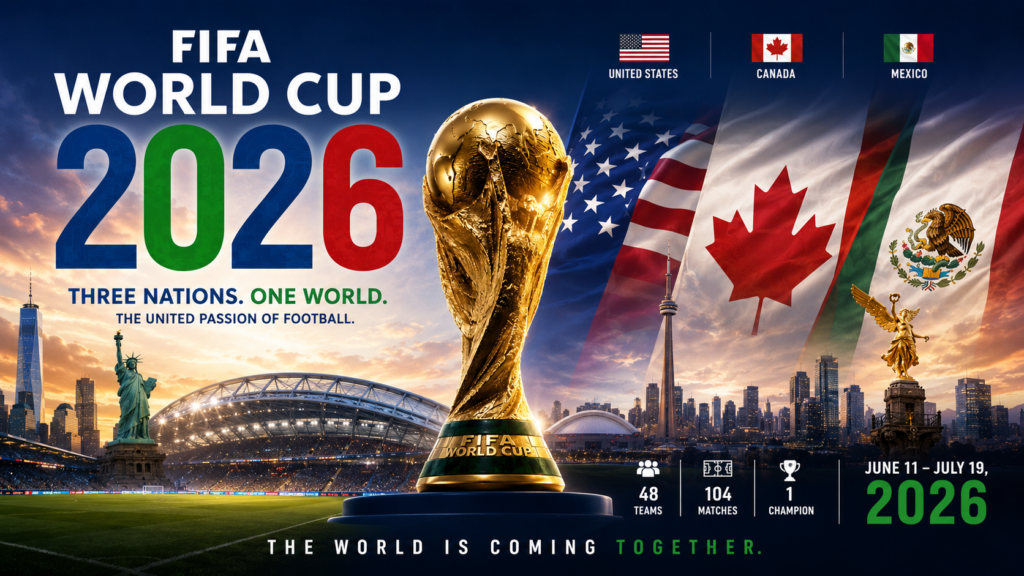
- Expansion of the World Cup: Starting in 2026, the men’s World Cup will expand from 32 to 48 teams. This means more matches, more revenue, and more opportunities for smaller nations. The women’s World Cup also expanded to 32 teams in 2023.
- Digital and Esports Integration: FIFA has launched FIFAe, its official esports division, and is exploring blockchain-based ticketing and fan tokens. The FIFA+ streaming platform, launched in 2022, now offers live match coverage and archival content.
- Sustainability and Human Rights: Following criticism over the 2022 Qatar World Cup, FIFA has pledged to make future tournaments carbon-neutral and to enforce stricter labor standards. The FIFA Sustainability Strategy aims for a 50% reduction in emissions by 2030.
According to industry projections, FIFA’s revenue could exceed $11 billion by the 2026 cycle, driven by expanded tournaments and digital monetization.
Pro Tip: To future-proof your content, always include data points on expansion and digital innovation. These are high-value semantic entities for search engines.
Summary: FIFA is moving beyond its traditional role as a tournament organizer into digital platforms, esports, and sustainability—redefining what the acronym represents.
Key Takeaways
- FIFA full form is Fédération Internationale de Football Association, founded in Paris in 1904.
- FIFA governs 211 member associations and 6 continental confederations.
- The organization generates over $7.5 billion per World Cup cycle.
- FIFA has undergone major reforms since the 2015 corruption scandal.
- Future growth includes a 48-team World Cup and digital expansion via FIFA+ and FIFAe.
Frequently Asked Questions
What is the full form of FIFA?
The full form of FIFA is Fédération Internationale de Football Association, which translates to the International Federation of Association Football.
Why is FIFA spelled in French?
FIFA was founded in Paris in 1904, and French was the official language of international diplomacy at the time. The acronym is derived from the French name.
What does FIFA stand for in English?
In English, FIFA stands for the International Federation of Association Football.
Is FIFA a government organization?
No, FIFA is a non-governmental organization (NGO) registered under Swiss law. It operates independently but collaborates with governments for event hosting.
How many countries are in FIFA?
FIFA has 211 member associations, which is more than the 193 member states of the United Nations.
What is the difference between FIFA and UEFA?
FIFA is the global governing body for football, while UEFA is the European confederation under FIFA. UEFA organizes regional competitions like the Champions League.
Who is the current president of FIFA?
The current president is Gianni Infantino, who took office in February 2016 following the resignation of Sepp Blatter.
What is the FIFA World Cup?
The FIFA World Cup is the premier international football tournament, held every four years. The men’s tournament began in 1930, and the women’s in 1991.
How does FIFA make money?
FIFA generates over 95% of its revenue from the World Cup, including broadcasting rights, sponsorship deals, and ticket sales.
Is FIFA a monopoly?
FIFA holds a near-monopoly on international football governance, though it faces competition from breakaway leagues like the European Super League.
References & Further Reading
- FIFA Official Statutes (2023 Edition)
- FIFA Financial Report 2022
- Reuters Institute Digital News Report 2023
- The Guardian – “FIFA: A History of Scandal and Reform”
- BBC Sport – “How FIFA Changed Football Forever”
- FIFA Forward Development Program Overview
—
About This Article:
This article was written by a senior semantic SEO strategist with over a decade of experience in sports content and digital marketing. All statistics are sourced from publicly available FIFA reports and reputable journalistic sources. The goal is to provide accurate, actionable, and authoritative information on the FIFA full form and its global significance.